


Related News


.jpg)
.jpg)
.jpg)


Recent federal court decisions have significantly shifted the landscape around U.S. tariffs; creating both opportunities and uncertainty for small businesses.
Federal Tariff Ruling: What Changed
Last week, the U.S. Supreme Court ruled that tariffs imposed under the International Emergency Economic Powers Act (IEEPA) were not authorized by the statute, effectively invalidating several major tariffs that had been applied to imports from multiple countries.
The ruling struck down a wide range of tariffs, including “reciprocal” tariffs and those targeting goods from countries such as Canada, Mexico, and China.
For businesses that paid these duties, the decision opens the door to potential refunds of tariffs already collected. However, the process is not automatic. Importers may need to pursue claims through the U.S. Court of International Trade, which could create administrative and legal hurdles—particularly for small businesses that may lack the resources to navigate complex refund claims.
What Comes Next
While the ruling eliminates these specific tariffs, it does not prevent the administration from pursuing tariffs through other authorities or investigations, and the administration is already pursuing new tariffs under different legal authority. A proposed global tariff of up to 15% on many imported goods has been introduced using a provision of the Trade Act of 1974.
That move is already facing legal challenges. More than 20 states, including Oregon, have filed a lawsuit arguing the new tariffs exceed presidential authority, creating additional uncertainty for businesses that depend on international trade.
For small businesses, this means supply costs and import duties could continue to fluctuate as courts review the new policy.
Watch for Refund Scams
As businesses begin exploring potential tariff refunds, experts are warning about the possibility of scams. Businesses should be cautious of unsolicited emails, calls, or third-party firms promising “fast refunds” or requesting sensitive financial information.
Best practices include:
- Working directly with your customs broker or trade attorney
- Verifying any government communication through official federal channels
- Avoiding upfront fees for services claiming guaranteed refunds
The US Chamber of Commerce provides an excellent recap webinar on this topic – check it out here.
Oregon Legislative Update: HB 4061
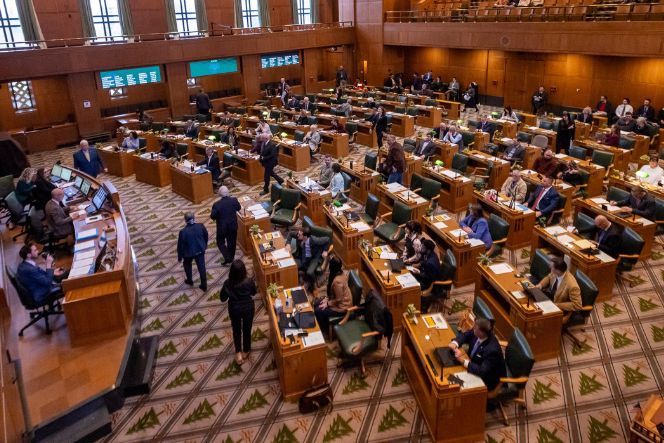
At the state level, Oregon lawmakers are advancing House Bill 4061B (as of March 5), which aims to strengthen the state’s trade and business development strategy.
The bill directs Business Oregon to collaborate with partners such as the Port of Portland, the Oregon Tourism Commission, and the Department of Agriculture to update Oregon’s unified trade strategy, with the goal of supporting exports, attracting international investment, and helping businesses navigate trade barriers such as tariffs.
HB 4061B also includes efforts to improve procurement processes and establish a task force focused on business retention and investment in Oregon, both of which could impact the long-term competitiveness of local businesses.
What This Means for Local Businesses
Trade policy remains one of the most dynamic areas of federal policy right now. Small businesses may see short-term opportunities through refunds but also continued volatility in pricing and international supply chains.
The Bend Chamber will continue monitoring federal tariff developments and state trade policies to ensure Central Oregon businesses remain informed and represented.
