
Workforce Housing Initiative
The Impact
Lack of housing affordability impacts economic growth
In our survey conducted in October 2022, Central Oregon businesses weighed in on how the lack of affordable and available workforce housing is impacting their ability to hire employees and, ultimately, their revenues.
67% – Decreased revenues
Reported that the inability to hire employees has negatively impacted their business revenues and overall growth potential.
81% – Hiring challenges
Said that the lack of affordable housing has significantly affected their ability to attract and retain skilled workers.
91% – Growth limitations
Stated that the high cost of housing limits business expansion and puts additional strain on their existing workforce.
Bend Chamber workforce housing revolving loan fund
The Workforce Housing Revolving Loan is a short-term, low-interest loan for vetted partners and builders to be used for land acquisition and other development costs for mid-market homes in the city of Bend. They can be a variety of types, including duplexes, cottages and single family dwellings. All homes must be deed-restricted and sold to locally employed households with an 80%–120% area median income (AMI).
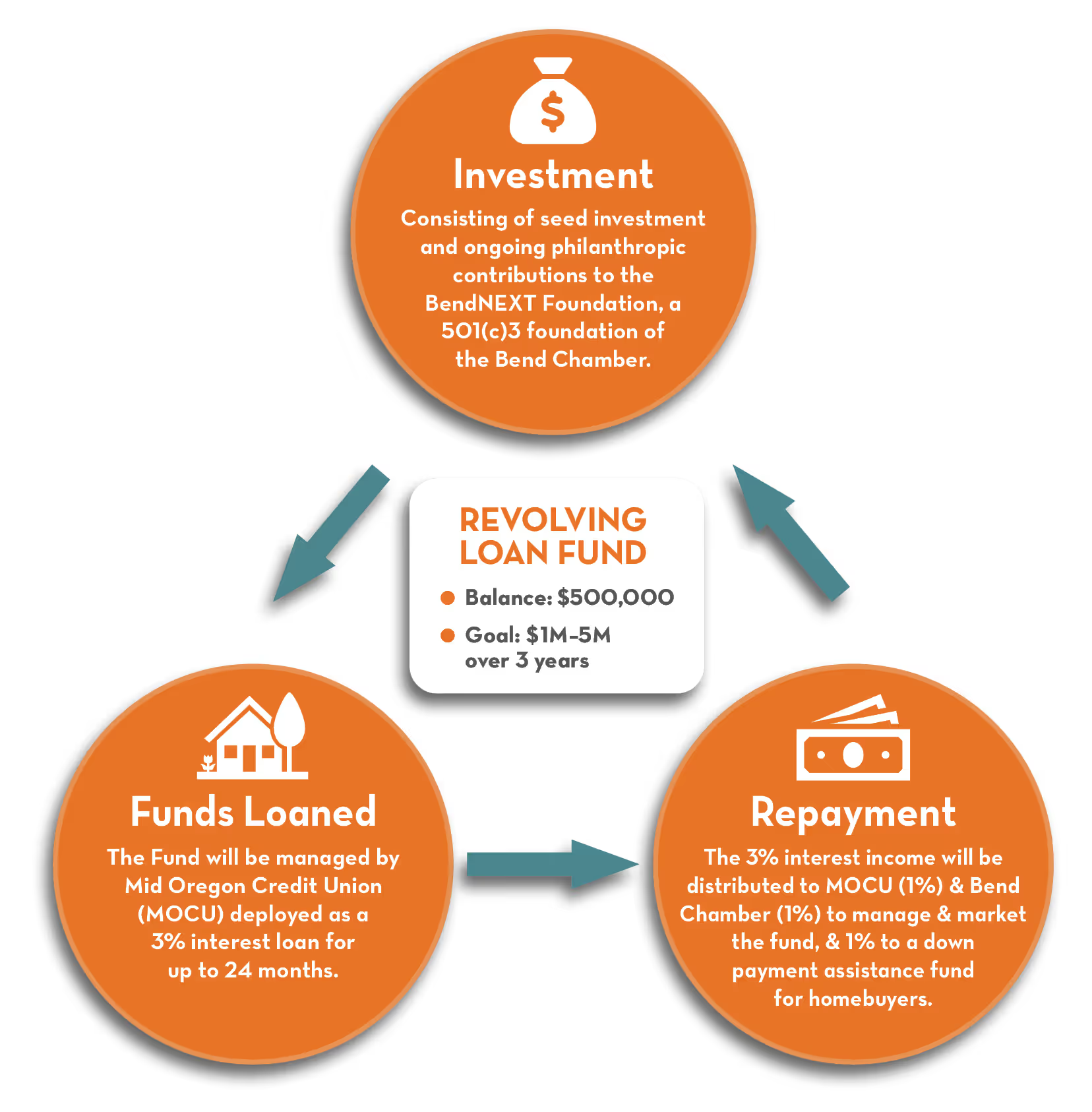
Bend Chamber workforce housing revolving loan fund
Goal
Increase rental or ownership housing for Bend employees in the 80–120% of Area Median Income band.
Guiding Principles
- Local partnerships and non-profit engagement
- Support for first-time and entry-level homebuyers
- Opportunity to build long term equity and wealth
- Return on investment is a strong/stable business community
Planning
6 Months
- Develop five-year work plan for WFH initiative, including policy development, local investment strategies, WFH accelerator/developer hub.
- Develop budgets for internal and external programs; and identify partnership/investment opportunities.
- Research best practices and opportunities for WFH accelerator role, including roles/responsibilities, funding sources and metrics.
Marketing & Development
6-12 Months
- Solicit public and private funds to support investments, including policy framework, local revolving loan fund and ADU program
- Develop and execute marketing plan and community engagement strategies, building on WFH social media program
- Assess research and data collection needs, and implement strategies as needed
- Convene WFH roundtable focusing on employer/developer connections, and partnerships for revolving loan program
Action
2-4 Years
- Policy Framework: Collaborate with cross sectional partners to refine and implement a policy framework for 2025–2027 Legislative Sessions
- Local Revolving Loan Fund: Launch a public-private revolving loan fund alongside employer partners to invest in local housing projects
- ADU Program: Working with local government partners, implementing ADU programs including pre-approved ADU library and ADU incentive program, with dedicated funding source
- Workforce Housing Accelerator: Launch WFH accelerator program focusing on employer/developer connections
Strategic Framework
The availability and cost of housing is at a critical level in Bend, making it too expensive for many to live near where they work. And employers know that housing is one of their biggest hurdles in hiring and retaining employees. Housing that is out of reach for many results in a lack of labor and a growing disconnect between who works and lives in Bend.
Put simply, the cost of finding a place to live — whether that means paying the rent, or a home mortgage, is driving away those who want to work here.
This effects staple jobs in our community, including nurses, teachers, firefighters and many industries that are essential —people who in the past would have had little trouble finding a place to live in Bend. Now, the housing market is nowhere within their reach.
Over the past year, the Bend Chamber has led an initiative with employers and community partners to build more workforce housing as quickly as possible.
Bend’s housing shortage needs multiple strategies that increase the amount and variety of mid-market housing types.
How do we get there?
- Support building well-planned living spaces within existing neighborhoods and higher buildings and more density in designated urban areas in Bend.
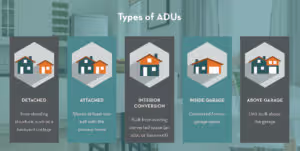
- Build accessory dwelling units (ADUs) to rent to those who work in Bend.
- Create new local and state policies that support the construction of more mid-market housing.
- Connect employers, developers, investors and housing projects and solutions.
- Educate the community—business, elected officials, leaders and employees, on the need for and solutions to, our mid-market housing crisis.
- Create well-planned living spaces within existing neighborhoods
- Allow for higher buildings and more density in designated urban areas in Bend
- Start the process of expanding our Urban Growth Boundary to increase the amount of land on which we can build.
- Build Auxiliary Dwelling Units (ADU’s) in adjacent rural areas
Our Work
What we’ve accomplished
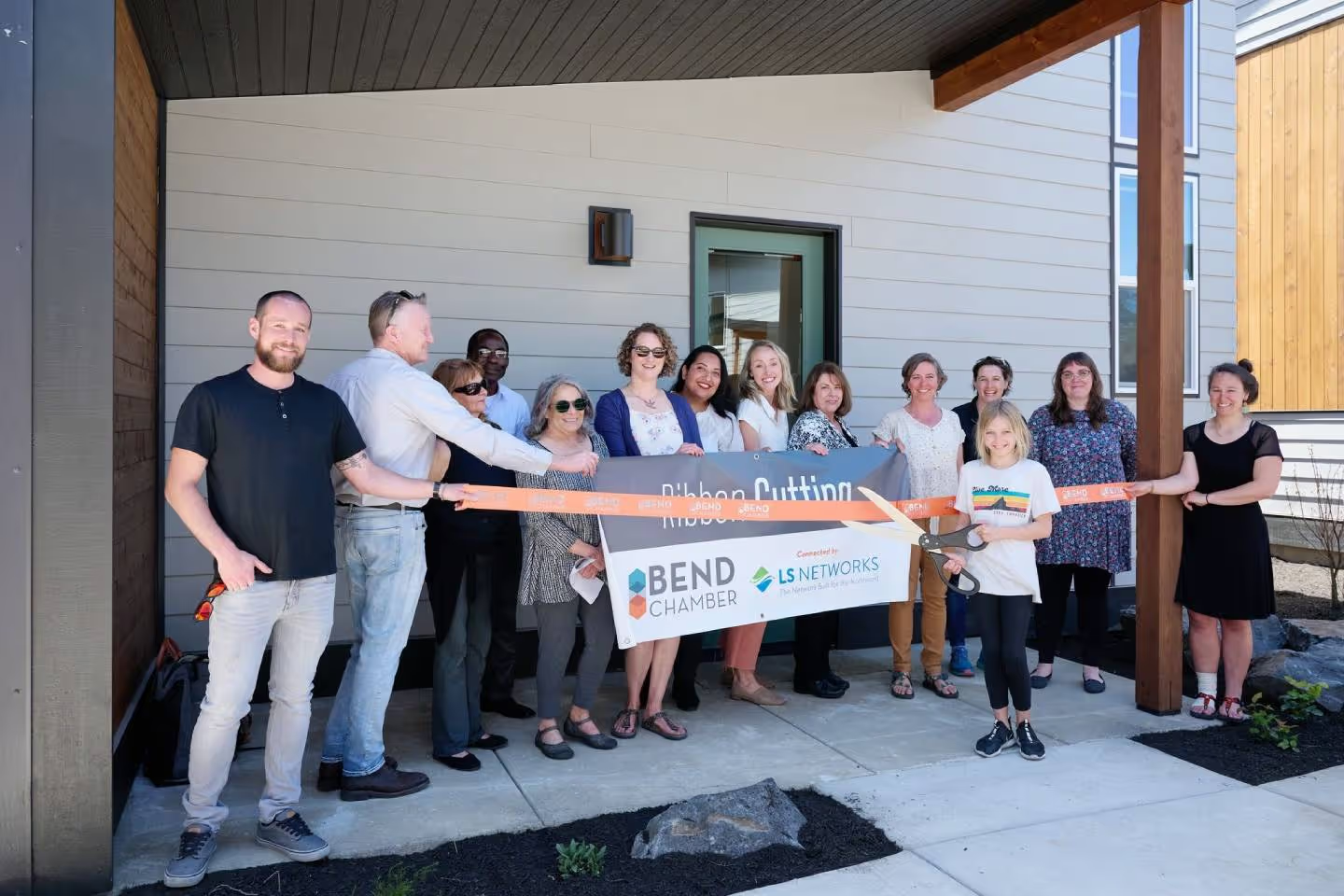
The Bend Chamber launched the Workforce Housing Initiative in 2021 with the goal of connecting with employers and community partners to build more workforce housing as quickly as possible to help alleviate the worker shortage in Bend. Below are our accomplishments to date.
Completed a public poll on housing and density demonstrating the need and support for building more housing, including more densely developed areas and more rental properties. The report was provided to the Bend City Council, Deschutes County Commission and the community.
- Conducted August 9–12, 2021
- Professionally administered by GS Strategy Group on behalf of Bend Chamber
- Statistically valid poll of 250 likely voters in Bend
Conducted an employer-focused survey to measure the impact of housing challenges on their ability to hire or retain talent.
- Focused on Bend area businesses
- Gained directional feedback from 50 respondents
Implemented a series of ongoing, robust social media campaigns designed to share the progress of the initiative, explain the challenges and barriers to solving the problem, showcase the innovative solutions that are available now, and solicit supporters to lend their voices to the initiative.
- 28 — Average number of posts across our social channels each month
- 1,800 — Average of engagements per month (reactions, likes, shares, comments, etc.)
- 100 — Collected more than 100 names and contact information to date from interested supporters
Began connecting employers, investors, developers, property managers and the city housing department to generate interest in new mid-market housing and support for pilot projects.
Created the Bend Accessory Dwelling Unit (ADU) Guide, a web-based “how to” manual for potential ADU development.
- 4,000 — Individuals have visited the Bend ADU guide since its inception
- 3,425 — Unique pageviews to date including introduction, financing, permitting, construction and property management pages
Hired a workforce housing expert from Cascadia Partners, who has:
- Lead a cross-industry workshop with more than 40 attendees, including developers, bankers, local and state government officials, and housing advocates to identify an actionable list of policy ideas to impact workforce housing for rental or ownership
- Presented at June’s What’s Brewing: Bridging the Gap in Mid-Market Housing
- Conducted research on local and state housing policies to help inform and support policy for the 2023 legislative session
- Produced a list of local and state workforce housing policy recommendations now being vetted with the forming coalition
Engaged with community partners to develop a strategic approach to tiered SDCs based on best practices in other communities.
Help us to do the work to implement change
Join us to solve Bend’s workforce housing shortage
Key tools & reports for workforce housing progress
Explore guides, surveys, plans and data fueling Bend’s housing strategy
Economic Impact Survey
Analysis of business feedback on the economic impact of high housing costs.
Bend Accessory Dwelling Unit Guide
Everything you need to know to plan & build an ADU in Bend.
Bend Central District Plan
View details of the City of Bend’s Central District Plan.
Stevens Road Tract Concept Plan
View details of the City of Bend’s Stevens Road Tract Concept Plan.
Workforce Housing Survey Slides
Analysis of Bend Chamber’s Workforce Housing survey.
Solving for Workforce Housing Slides
Slides from Mike Kosdrosky of Workforce Housing Solutions.
Attainable Housing Presentation
Great presentation on challenges, perceptions and solutions.
Employee Relocation Info
Resources for employees moving to Bend.
Survey Analysis Webinar
Watch a replay of our workforce housing challenges webinar.
Home Share Oregon
Learn more about this innovative approach to increasing affordable housing inventory.
Thank You to Our Collaborators
With thanks to our collaborators for helping us work towards solving Bend’s workforce housing shortage






The Bend Chamber is actively supported by these Signature Investors


.avif)