

Related News

.jpg)
.jpg)

.jpg)


.jpg)
By Emily Boyd, Government Affairs Manager, Bend Chamber
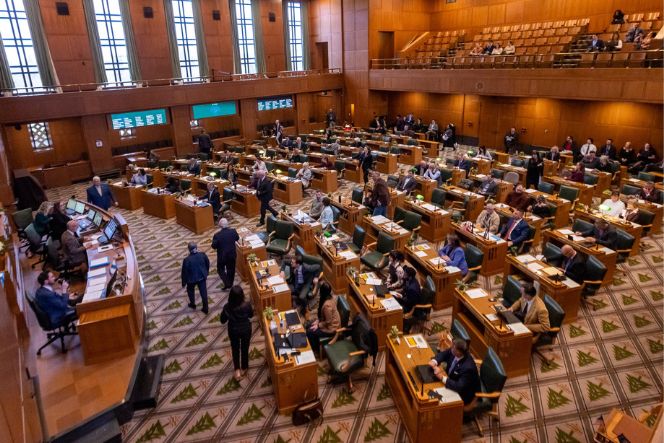
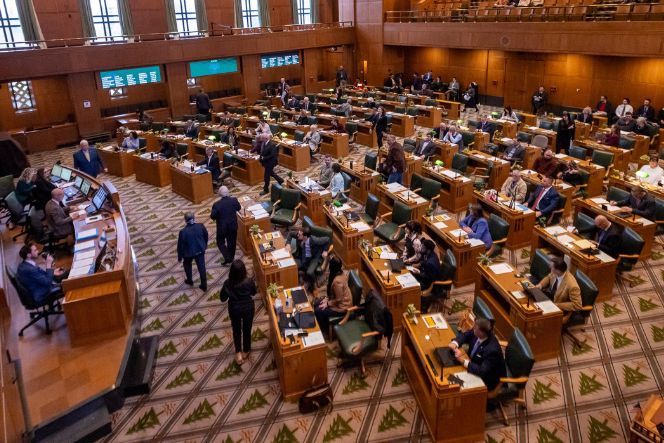
Oregon lawmakers returned to Salem June 15–17 for Legislative Days, the Legislature's primary interim work period between sessions. While no bills were voted on, committees used the three-day meeting to review implementation of recently passed legislation, hear from state agencies and industry experts, and begin laying the groundwork for the 2027 long session.
A consistent theme emerged across committee meetings: how Oregon can accommodate growth while maintaining affordability, modernizing infrastructure and remaining economically competitive. Conversations repeatedly centered on housing production, energy reliability, workforce development, transportation and the infrastructure needed to support the state's growing, albeit slowly, population and economy.
One issue that surfaced across multiple committees was the rapid growth of data centers and the opportunities and challenges they present. Both the Joint Committee on Information Management and Technology and the House Committee on Energy and Environment examined the industry's expansion and its implications for Oregon's electric grid, economic development and climate goals. Oregon currently has approximately 125 operating data centers, with another 17 planned or under construction, placing the state among the nation's leading data center markets. Presenters emphasized that the question is no longer whether Oregon will experience significant growth in electricity demand, but how to plan for it without overbuilding or underbuilding grid infrastructure. Discussions highlighted growing uncertainty around the state's ability to meet its clean energy goals as large new electric loads emerge while existing hydroelectric resources and transmission capacity face increasing constraints.
Across both committees, lawmakers acknowledged the growing tension between Oregon's economic development objectives and its climate commitments. While presenters noted that data centers generate significant capital investment, construction employment, property tax revenue and economic activity, they also raised questions about the sector's rapidly growing electricity demand and its implications for meeting the state's clean energy goals. Discussions centered on expanding transmission capacity, improving grid flexibility and resilience, increasing transparency around energy use, and ensuring large energy users help fund the infrastructure necessary to support their growth without shifting costs to existing ratepayers.
Housing remained another dominant topic. Committees reviewed updated findings from the Oregon Housing Needs Analysis (OHNA), which estimates the state will need approximately 491,000 new housing units over the next 20 years. Discussions emphasized that meeting this demand will require more than expanding urban growth boundaries. Lawmakers focused on development-ready land, infrastructure investments, the role of Housing Production Strategies and continued refinement of recent legislation to accelerate housing production.
The Legislature also examined the financial realities facing developers and owners of income-restricted affordable housing serving households at or below 80% of area median income (AMI). Rising insurance premiums, maintenance costs, utilities, security expenses and higher interest rates are placing increasing pressure on existing affordable housing developments. Members discussed additional preservation financing tools, flexible funding options and rental assistance programs, with broad agreement that preserving existing affordable housing and preventing evictions is significantly more cost-effective than addressing homelessness after displacement occurs.
Natural resources committees turned their attention to Oregon's growing natural climate solutions workforce, highlighting the need to strengthen recruitment, training and career pathways for restoration, forestry, wildfire resilience and habitat management. Recommendations included expanding rural and tribal workforce development programs, creating statewide workforce strategies, increasing housing options for seasonal workers and developing new credentialing programs to support these emerging occupations.
Looking ahead, housing supply, infrastructure readiness, energy reliability, workforce availability, and regulatory predictability will continue to shape legislative conversations and will likely remain central themes as lawmakers begin preparing for the 2027 long session. We will continue engaging with legislators, agency staff and coalition partners throughout the interim to ensure Bend and Central Oregon's business community has a strong voice as these policy discussions evolve.
