

Related News












.png)

For a century, the Bend Chamber of Commerce has been woven into the story of Bend’s growth.
Founded in 1926, the organization began as a small group of local business leaders focused on economic opportunity and civic development. Over the decades, it grew alongside the city itself. As Bend changed from a timber town into a regional center for tourism, outdoor recreation, health care, technology, advanced manufacturing and small business, the Chamber remained a consistent presence in local conversations about growth, resilience and community priorities.
This year, as the Chamber celebrates its 100th anniversary, history will be explored through a monthly series in partnership with The Bend Bulletin (a founding member back in 1926!) Beginning in May and continuing through the end of 2026, the series will look back at the Chamber’s role in Bend’s development through historic photos, archival stories and reflections on the issues that shaped Central Oregon.
The series is intended to do more than mark an anniversary. It will offer readers a window into how Bend has responded to change over time, and how local business and civic leaders have worked together during pivotal moments in the community’s history.
The Chamber traces its roots to the Bend Commercial Club, which was formed to promote economic opportunity in a young and growing city. On May 26, 1926, the organization was renamed the Bend Chamber of Commerce. That name change marked the beginning of an institution that would become closely tied to Bend’s economic and civic life.
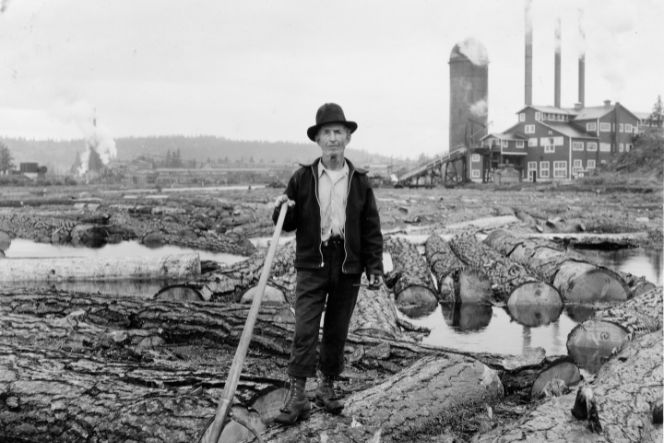
In the 1920s and 1930s, Bend was emerging as a major timber center. Large lumber operations helped define the local economy. Workers, families, merchants, and small businesses grew around that industrial base. The Chamber’s early work reflected the needs of that era. It promoted the region, supported business activity, advocated for transportation access, and helped push for infrastructure needed to sustain growth.
Roads, rail service, freight rates, irrigation, and water access were central issues. They affected whether goods could move efficiently, whether farms could succeed, and whether visitors could reach Central Oregon. Many of those early priorities still echo in today’s conversations about infrastructure, housing, workforce needs, and economic competitiveness.
The Chamber also played an early role in promoting Bend as a destination. Long before destination marketing became a familiar term, the organization distributed maps, visitor guides and promotional materials highlighting Bend and the Oregon Cascades. It promoted scenic routes, recreation opportunities, and regional travel at a time when automobile tourism was expanding. That work helped introduce Central Oregon to a wider audience and laid groundwork for the visitor economy that would later become one of the region’s defining industries.
As Bend entered the mid-20th century, the Chamber remained small but active. At one point, it operated with a two-person staff and served a few hundred members. Still, its community role was broad. The organization supported local traditions, visitor services, parades, holiday celebrations, and the early development of the ski industry. These efforts helped shape Bend’s civic identity as well as its economy.
The 1960s brought a more difficult chapter. Bend faced economic uncertainty after the loss of hundreds of sawmill jobs. In response, the Chamber and its partners supported industrial development efforts aimed at attracting new employers and diversifying the local economy. Those efforts helped create thousands of jobs and signaled a broader transition for the region.
In the decades that followed, Bend continued to evolve. Its economy became more diverse. Its population grew. Its reputation as a place for outdoor recreation, entrepreneurship, and innovation expanded. Through those changes, the Chamber’s work also expanded.
Today, the Bend Chamber represents nearly 1,650 member businesses and serves as a member-supported, independent voice for economic vitality in Central Oregon. Its current priorities include workforce housing, childcare, infrastructure, business competitiveness, and leadership development. The organization also runs programs such as Leadership Bend, Bend Emerging Talent, Bend 101 and NEXTUp Leaders.
The monthly anniversary series will revisit key periods in the Chamber’s history, from early tourism and infrastructure advocacy to Bend’s community traditions, economic turning points and modern growth challenges. Each installment will connect past events to present-day questions facing Bend and Central Oregon.
This history is not simply institutional. It is also a community story. It reflects generations of business owners, civic leaders, workers, volunteers, and residents who helped shape the region through periods of opportunity, uncertainty, and reinvention.
A 100-year anniversary offers a moment to look back. It also raises a question that has followed Bend for generations: what kind of community comes next?
For the Bend Chamber, that question has been central to its work since 1926. Through this series, readers will have the chance to see how that work has changed over time, and how the decisions of earlier generations continue to influence the Bend of today.
This article was originally published in the Bend Bulletin.
